

A is for Assume: possibility is a decision, not a personality
The second element of TARGET. Optimism gets dismissed as a temperament. In hard problem solving it is a discipline, and it is yours to choose.
By The Solutionist Agenda
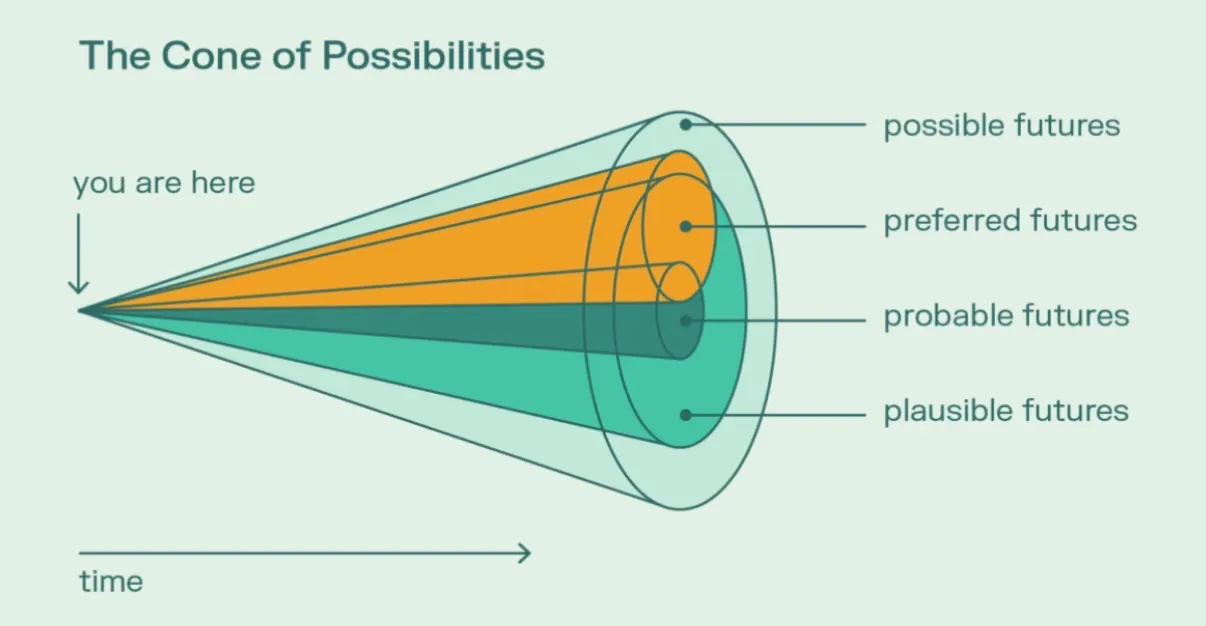
Last week we defined the target. This week we decide what to believe about it before we have any right to.
Assume possibility.
This approach is a profoundly deliberate one.
Hard problems are hard, that is in their very nature. But if we accept this characteristic, it makes a way through all that much harder to see. When faced with an existential challenge, the natural tendency is to see nothing but that problem. But we have no interest in the problem, we are all about solutions.
So by assuming possibility we are purposefully overriding the reflexive blockers. You decline, for present purposes, to take no for an answer. We hold as an incontrovertible truth that an ideal outcome is achievable. We make anyone who wants to shut it down bring evidence, not feelings or presumptions.
Now, you are entitled to bristle a bit at this one. Misunderstood, this element can sound a bit like the worst kind of motivational nonsense. The poster on the wall that says ‘there are no mistakes, only learnings’. The manager who trumpets ‘there are no problems, only opportunities’. Both while the joint is burning down around you. This is not that, but I will explain it so you aren’t left with any illusion that it might be.
Disciplined optimism is not naivety
Naive optimism ignores the facts. Disciplined optimism confronts them and still refuses to surrender the outcome without cause.
The distinction is emphatic but not original. Admiral James Stockdale, American officer, Vietnam war prisoner and writer and thinker on stoicism, drew profound correlations between survival in adversity and disciplined optimism.
We don’t live in the world of anecdotes here, but to help the explanation let me leverage one. He talked of the differential experiences of prison camp survivors he was held with. He recounted one category of prisoner who said they would be home by Christmas, and died of broken hearts when Christmas came and went.
The other category were the survivors, and they did something different and hard. They held absolute faith that they would prevail, and at the same time confronted the most brutal facts of their situation. Jim Collins later described this as the Stockdale Paradox. Faith in the end state, clarity about the present. But clarity about the present that does not blind you to the possibilities of the future.
That is Assume possibility. Not ‘this will be fine’, nor ‘this is impossible’. Rather, ‘this can be done, and I am going to stay with that until the evidence, not sentiment, proves the contrary to me’.
Why the reflex is to say ‘no’
Because ‘no’ is safe. ‘That won’t work’ costs the person who says it nothing, and protects them from ever being wrong. It is the cheapest sentence in any meeting, and the most expensive impediment to problem solving over time. Caution earns its keep; the reflexive ‘no’ is weak and defeatist.
Premature ‘that won’t work-ism’ is how options die before anyone has properly interrogated them. It stops them being weighed, evaluated, legitimately tested. It cuts potentially viable solutions off at the knees on the strength of a shrug.
There is a real cost to the ‘that won’t work’ mentality that compounds over time. Every time possibility gets closed down on defeatist sentiment, the room learns that ambition is unwelcome, and it brings a little less next time.
What the evidence says
Albert Bandura spent a career on self-efficacy, the belief that you are capable of affecting an outcome. It is not a mood. It reliably predicts how much effort people put in, how long they persist when it gets hard, and how they read setbacks; as information, or as proof they were right to doubt. Belief does actual mechanical work in problem solving.
Victor Vroom’s expectancy theory makes the same point from the other side. Motivation depends, in part, on whether people expect their effort to lead anywhere. Tell a team the outcome is probably impossible and you have not been realistic. You have switched off the problem solving engine and called it prudence.
None of which means willing things into being. It means that belief is an input to the result, so you may as well set it deliberately rather than let the most anxious person in the room set it for everyone.
Try this
Next time someone says ‘that won’t work’, do not argue. Instead, ask ‘what would have to be true for it to work?’
Then see what happens.
What this question should do is turn the conversation from a verdict into a design problem. Now a design problem is a discussion full of possibility, and this is where problem solving lives.
Sometimes the answer is genuinely ‘nothing could make this work’, and now you know, on evidence, that you should move on to the next option. Often enough though, you will find a design problem discussion delivers new conditions for consideration, and you have just found your next actions.
The reframe
You do not get to control whether a hard thing is possible. You do get to decide whether you engage it as though it might be. That decision shapes the effort, the persistence and the room, long before it shapes the result.
Assume possibility. Then make the doubters bring evidence, and turn every ‘no’ into a ‘what would it take’.
Next letter: R, for Reverse engineer the path, and how to plan backwards from a future that has not happened yet.
Steve
The Solutionist Agenda. Clear thinking. Problems solved.
Subscribe